


How to Get Rid of Moss and Algae on Your Patio, Paths and Steps

Moss and algae can leave your patio, paths and steps looking tired. More importantly, green growth can make paving slippery when it’s wet. In Haddington and across East Lothian, damp weather, shade and fallen leaves can all help it take hold.
A quick scrub may brighten the surface for a while, but lasting algae removal on a patio needs more than taking off the visible layer. Here’s what causes the growth, what you can do about it, and when a professional clean may be the safer option.
Why do moss and algae appear?
Moss and algae thrive where surfaces stay damp. The Scottish climate can give them plenty of opportunity, especially in areas with limited sunlight or airflow.
Common causes include:
Shade: Trees, fences and north-facing walls can stop paving drying quickly.
Leaves and debris: A layer of leaves traps moisture and can leave marks as it breaks down.
Poor drainage: Water that sits on the surface creates favourable conditions for growth.
Open joints: Dirt and moisture collect between paving slabs or blocks, where moss can become established.
Moss often grows in joints and uneven gaps. Algae can spread as a thin green film across the paving itself. The RHS guide to moss and algae on hard surfaces also recommends paying attention to the damp, shaded conditions that encourage growth.

Why it matters beyond appearance
A fresh-looking patio is a welcome improvement, but safety matters too. Algae and moss can become slick underfoot, particularly after rain or frost. Take extra care on steps and paths used by children, older family members or visitors.
Growth can also hold moisture against paving. Over time, it may affect the appearance of joints and contribute to staining. On block paving, disturbed or missing jointing sand can let weeds and moss establish more easily. On older stone, aggressive cleaning can harm the surface or pointing.
The aim is to restore your outdoor space without damaging the material beneath the growth.
Why a quick scrub may not last
A stiff brush is useful for lifting loose moss and small patches of growth. But brushing alone can leave algae behind, especially if it has spread across the surface. Washing-up liquid is made for household cleaning, not as a lasting treatment for outdoor biological growth. It may shift some surface dirt, but it won’t fix damp conditions or prevent regrowth.
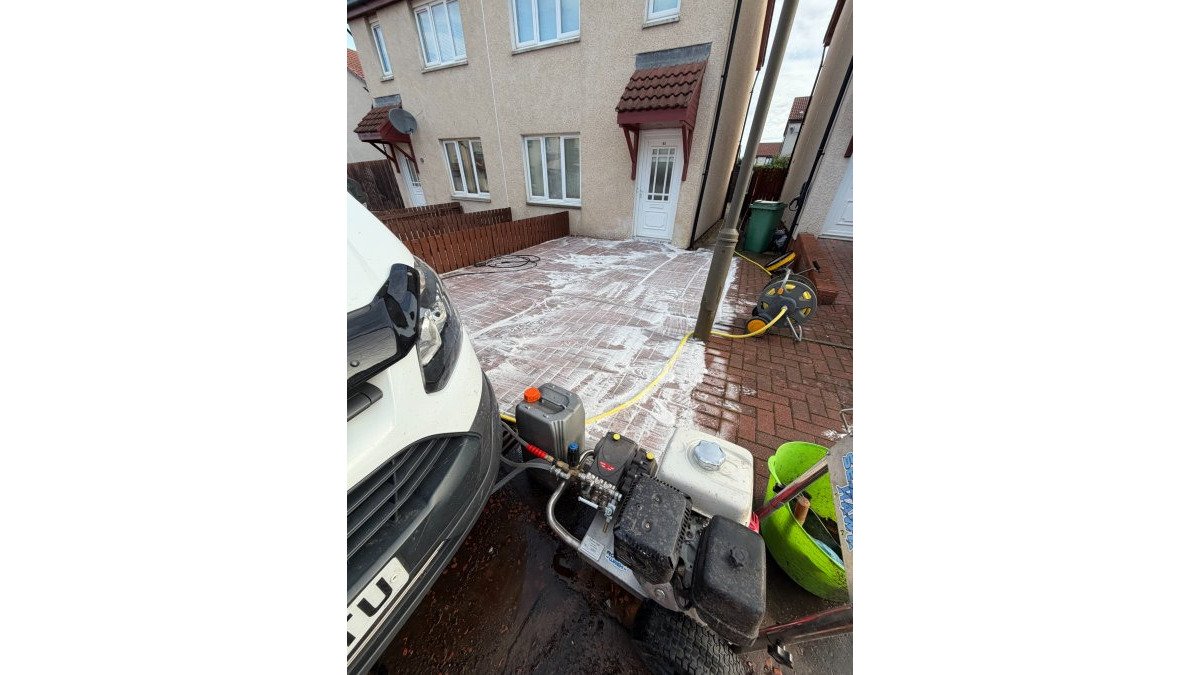
Pressure washing can remove visible grime and growth quickly. However, pressure washing alone may leave the conditions for regrowth unchanged. Too much pressure can also wash jointing sand from block paving, damage pointing or mark softer stone.
If you use a pressure washer, make sure the paving can tolerate it, use the lowest effective pressure and keep the lance moving. Avoid directing water into joints, walls, door thresholds or nearby drains. If you’re unsure what your paving can handle, it’s safer to get advice before starting.
A practical way to tackle patio moss and algae
1. Clear leaves and loose debris
Sweep the area before cleaning. Remove leaves, soil and loose moss, and clear nearby gullies so water can drain away. Collect the debris rather than pushing it into a drain.
2. Brush small patches carefully
Use a stiff outdoor brush to lift loose growth. A hand tool can help remove moss from joints, but work gently so you don’t loosen pointing or jointing material. Be particularly careful on steps and uneven paving.
3. Check drainage and shade
Look for areas where water regularly sits. Keep drainage channels clear and consider whether overhanging branches or dense planting can be trimmed back. Regularly sweeping leaves away can also help surfaces dry sooner.
Improving these conditions won’t remove established growth by itself, but it can make the surface less inviting for it to return.
4. Choose a suitable treatment for persistent growth
For stubborn algae and moss, a suitable biocide treatment can help address organic growth that brushing or washing may leave behind. Use only a product labelled for the surface you’re treating, and follow its instructions exactly, including any guidance on protective equipment, application and keeping people or pets away.
Take care around plants, lawns and drains. Prevent treatment or wash water from running into a surface-water drain or watercourse. Scottish guidance explains the importance of managing surface-water drainage; see the Scottish Government’s domestic drainage guidance. If you’re not confident you can control runoff safely, ask a professional to assess the job.
5. Use a gentler method on delicate surfaces
Old stone, soft masonry, render and painted surfaces can be vulnerable to high pressure. A professional soft wash uses low pressure with specialist treatments suited to the surface. It can clean delicate materials more gently than a forceful wash.
Always test a small, inconspicuous area before treating an unfamiliar surface. If the stone is particularly old, fragile or valuable, get advice before applying a cleaner.

When to call in a professional
A small patch of moss may be manageable with a brush and careful maintenance. A larger patio, heavily stained path or slippery set of steps may need a more thorough approach. A professional can assess the paving, choose an appropriate cleaning method and help protect joints and surrounding areas.
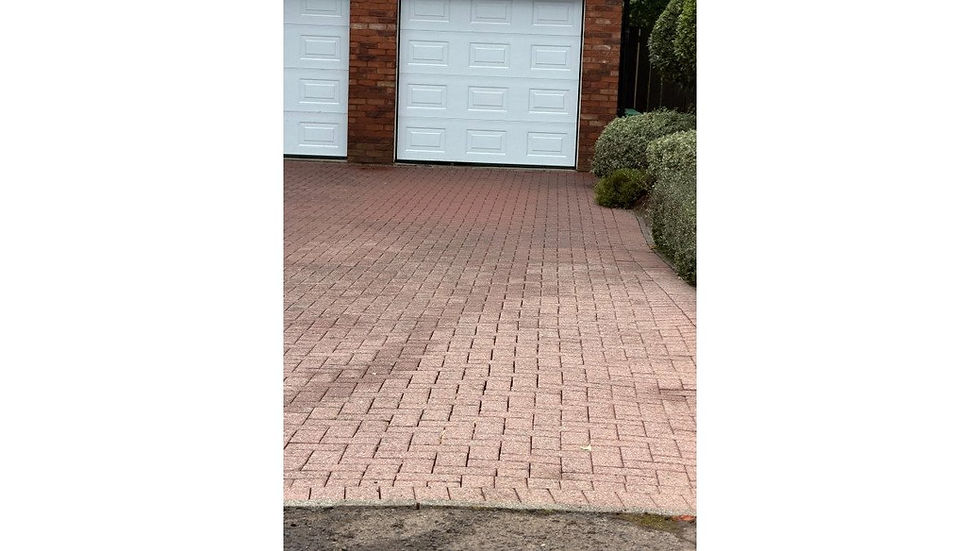
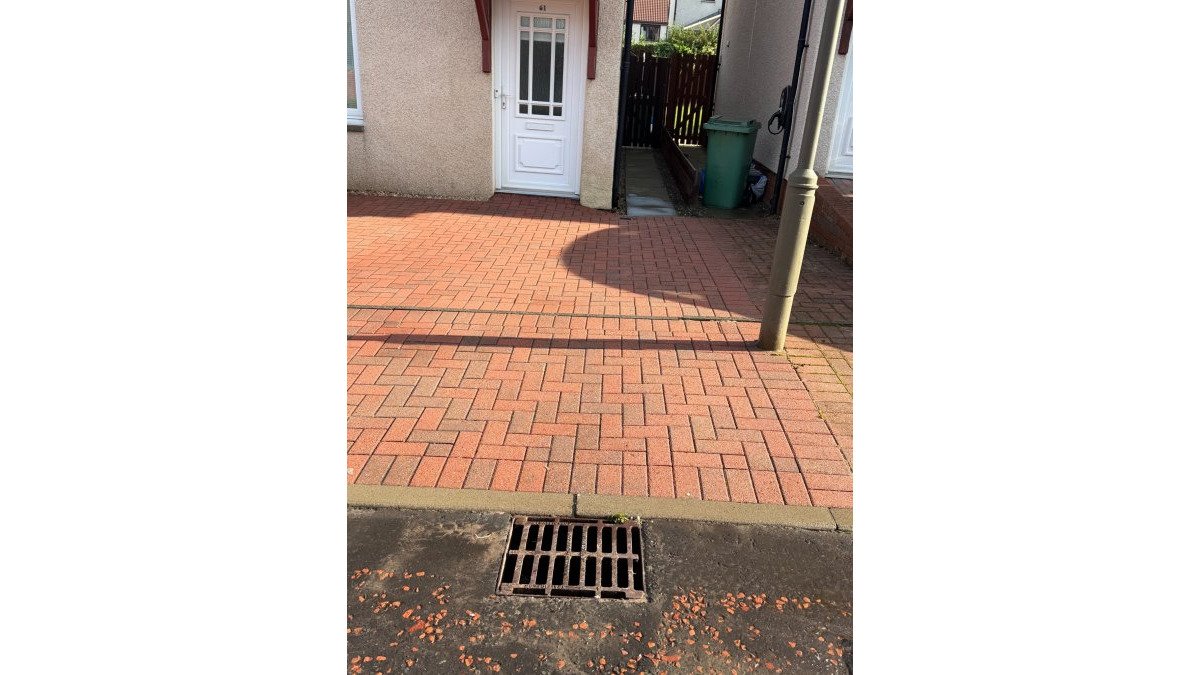
At Drive Revive Haddington, our patio restoration service is designed to lift built-up moss, algae and grime and leave your outdoor space looking refreshed. We also provide driveway restoration for block paving and driveways, masonry cleaning, professional soft wash and biocide treatment for suitable surfaces.
We’re a local East Lothian team, fully insured and precision driven. We explain the work clearly and provide transparent upfront pricing, so you know what to expect before booking. Find out more about our patio cleaning in Haddington or our soft washing service.

Keep the fresh look for longer
Once your patio, paths and steps are clean, a few simple habits can help:
Sweep away leaves and debris regularly.
Keep drains and channels clear.
Brush moss from joints before it spreads.
Reduce excessive shade where practical.
Check for areas where water pools after rain.
These steps won’t prevent all regrowth, especially in damp or shaded spots, but they can help your paving stay cleaner for longer. The same care applies to driveways and paths around your home. For stone cleaning in Scotland, always match the cleaning method to the type and condition of the stone.
If you’re researching patio cleaning in Edinburgh or pressure washing in East Lothian, the right approach still depends on the surface, the joints and the drainage. Avoid assuming that the highest pressure will give the best result.
Ready to bring your patio back to life?
Moss and algae don’t have to be a permanent feature of your outdoor space. With careful cleaning, a suitable treatment and a bit of attention to drainage, your patio, paths and steps can look brighter and feel safer underfoot.
For friendly local advice and a free, no-obligation quote, get in touch with Drive Revive Haddington. We’ll talk you through the options and give you clear pricing before you decide.
Comments