


Signs You Need Driveway Cleaning: 7 Warning Signs

Table of Contents
Why Your Driveway Deteriorates in East Lothian's Climate
7 Signs You Need Driveway Cleaning
1. Green Algae and Black Lichen Spreading Across the Surface
2. Moss and Weeds Growing Between Block Paving Joints
3. Persistent Oil, Rust and Tyre Marks That Won't Shift
4. Slippery Surfaces After Rain or Damp Weather
5. Faded, Dull or Discoloured Paving
6. Standing Water and Poor Drainage
7. Loose or Shifting Blocks and Missing Jointing Sand
How Often to Pressure Wash a Driveway UK Homeowners Should Know
Best Driveway Restoration Techniques for Block Paving and Concrete
Driveway Pressure Washing Cost East Lothian: What to Expect
DIY vs Professional Driveway Cleaning: Which Is Right for You?
Conclusion: Act on the Signs Before Small Problems Become Expensive
Frequently Asked Questions
Last Updated: September 14, 2026
Why Your Driveway Deteriorates in East Lothian's Climate
East Lothian's coastal position gives it a weather pattern that is genuinely hard on hard landscaping. Salt-laden air blows in off the Firth of Forth, rainfall is frequent and often light enough to keep surfaces damp for days, and winter temperatures hover close to freezing without staying cold enough to kill off organic growth. That combination is close to ideal for algae, lichen and moss.
Driveway cleaning is the process of removing that biological growth, along with dirt, oil and tyre deposits, from a paved surface before it causes structural damage. This guide from Drive Revive Haddington covers the seven warning signs that tell you it is time to act, plus how often to clean, which restoration methods suit block paving and concrete, and what to expect on cost around Haddington.
The wider picture matters here. The Met Office climate averages for Scotland show that eastern Scotland receives fewer sunshine hours than the national average, and damp shade is exactly what lichen colonises first. Left alone, that growth works its way into jointing sand and starts prising blocks apart.
Key Takeaway Organic growth is not just cosmetic. Once moss and weeds establish in the joints of block paving, they push the blocks apart and let water penetrate the sub-base, which is where the expensive damage begins.
7 Signs You Need Driveway Cleaning
The seven signs below run roughly in order of how urgently they need attention. The first three are cosmetic. The last four are where the surface itself starts to fail.

1. Green Algae and Black Lichen Spreading Across the Surface
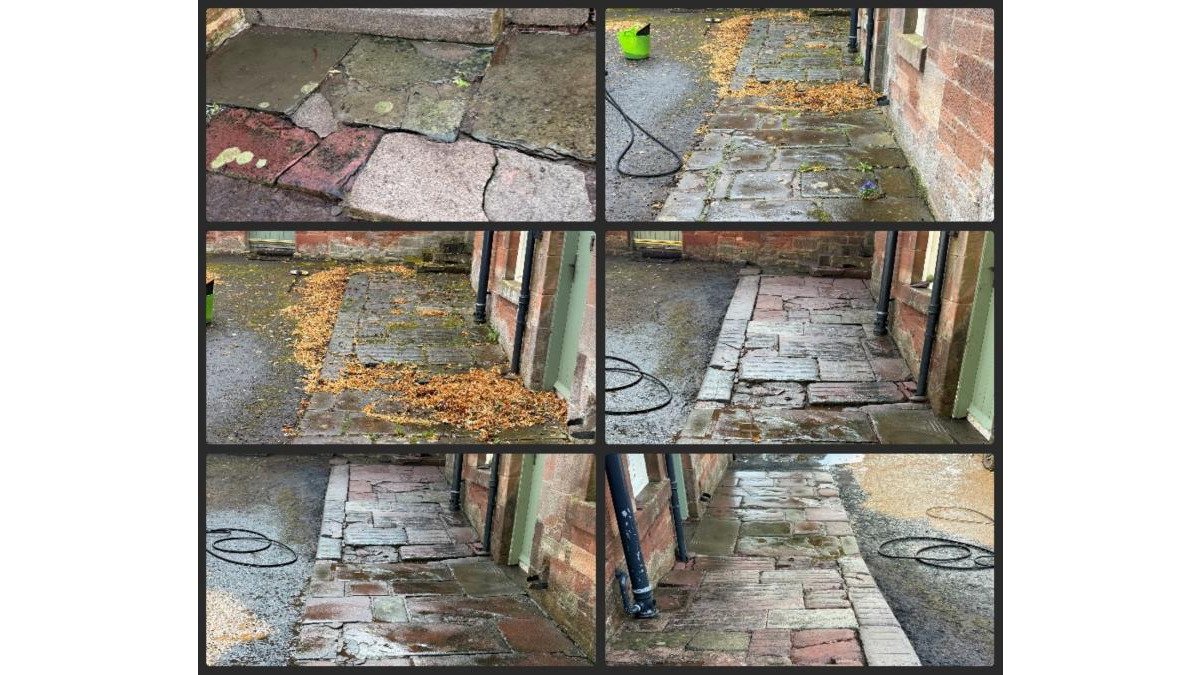
Green algae appears as a thin, slippery film that darkens the paving and spreads fastest on north-facing or shaded driveways. Black lichen is the harder problem: it bonds to the surface of the block and resists ordinary sweeping, hosing and consumer treatments.
Lichen is worth acting on early because it etches into the surface over time. Once it has been there for several seasons, it can leave a permanent shadow even after the growth is killed. A common mistake is treating lichen with a general-purpose cleaner and expecting it to lift. It usually needs a dedicated treatment followed by pressure washing at a controlled setting.
2. Moss and Weeds Growing Between Block Paving Joints
Moss in the joints is the clearest early signal that jointing sand has washed out. The sand is what locks the blocks together and stops water getting underneath. When it disappears, moss moves in, and the moss holds moisture against the block edges.
Weeding by hand removes the symptom, not the cause. The joint needs refilling with kiln-dried sand after cleaning, or the growth returns within a season.
3. Persistent Oil, Rust and Tyre Marks That Won't Shift
Oil drips, rust stains from garden furniture and black tyre marks from turning on the driveway all sit in the surface rather than on it. Household detergent and a stiff brush will not touch them.
These stains need a cleaner formulated for hard landscaping, applied before pressure washing rather than after. Oil that has soaked into the block for months may not lift completely, which is why prompt treatment matters. These stains need a cleaner formulated for hard landscaping, applied before pressure washing rather than after. Oil that has soaked into the block for months may not lift completely, which is why prompt treatment matters.
4. Slippery Surfaces After Rain or Damp Weather
A slippery driveway is a safety issue, not just a maintenance one. The slipperiness almost always comes from a biological film of algae or lichen, which is at its most hazardous on wet block paving and on any surface with a gradient.
If you or a visitor has slipped, treat it as urgent. The fix is a full clean followed by a treatment that prevents regrowth, not a spot clean of the worst patch.
Watch Out Consumer pressure washers used at full pressure on block paving blast out the jointing sand and leave white streaks across the surface (Maintenance and Repair - Power Washers). Once the sand is gone, the blocks shift and the joints need refilling before the driveway is stable again.
5. Faded, Dull or Discoloured Paving
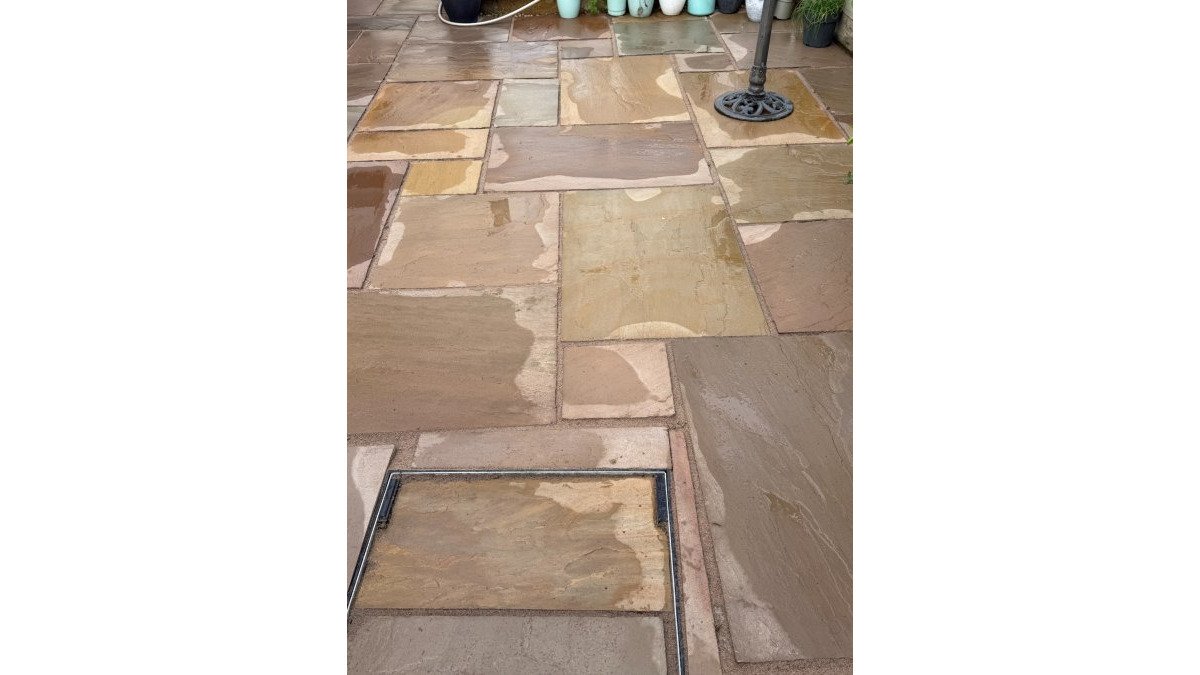
Paving that has lost its colour is usually carrying a layer of grime and microbial growth that acts like a film over the surface. The colour is still there underneath.
Restoring it is a two-part job: a deep clean to remove the film, then a sealer to protect the surface and slow down the return of staining. Sealing a driveway that has not been properly cleaned traps dirt underneath and looks worse than leaving it alone.
6. Standing Water and Poor Drainage
Water pooling on the driveway after rain means either the joints are blocked or the surface has settled. Standing water accelerates everything else on this list: it feeds algae, softens jointing sand and increases the risk of frost damage in winter.
If the pooling is in one consistent spot, the cause is usually a low point in the paving rather than a blocked drain. That is a restoration job rather than a cleaning job.
7. Loose or Shifting Blocks and Missing Jointing Sand
Loose blocks are the point at which cleaning alone is no longer enough. Missing sand, rocking blocks and visible gaps all point to a joint that has failed.
The repair sequence is: clean the surface, lift and re-bed any loose blocks, refill the joints with kiln-dried sand, then seal. Skipping the sand refill is the single most common reason a driveway looks bad again within months.
How Often to Pressure Wash a Driveway UK Homeowners Should Know
For most UK driveways, an annual pressure wash is the right baseline, with a second clean in autumn if the driveway sits in shade or under trees (Managing water in your garden / RHS). Driveways on exposed coastal sites, including much of East Lothian, often need attention more frequently because salt air and damp conditions speed up organic growth.
Driveway situation | Cleaning frequency | Why |
Shaded, north-facing paving | Every 6-9 months | Algae and lichen establish faster without sun |
Coastal or exposed site | Every 6-12 months | Salt air and damp keep surfaces wet |
Mature trees overhead | Twice a year | Leaf litter and sap feed growth |
Sealed block paving | Annually | Sealer slows regrowth between cleans |
Concrete driveway, full sun | Every 12-18 months | Slower growth, fewer organic deposits |
The honest answer is that frequency depends on how fast your driveway gets dirty, not on a fixed calendar. Check the joints each spring. If sand is missing or moss is visible, it is time.
Best Driveway Restoration Techniques for Block Paving and Concrete
The best restoration technique for block paving is a controlled pressure wash followed by joint sand refill and a protective sealer. For concrete, a surface cleaner attachment at moderate pressure plus a dedicated cleaner handles most staining without etching the surface.
A few practical points that most guides skip:
Pressure setting matters more than pressure power. Block paving needs a lower setting and a wider nozzle to avoid stripping jointing sand. Concrete tolerates more.
Clean, then treat, then protect. Cleaning removes the growth. A treatment prevents it returning for several months. Sealer locks in the result.
Never seal a damp driveway. Resiblock and similar sealers need a completely dry surface, and in East Lothian that means watching the forecast for a dry spell rather than assuming a rain-free morning is enough.
Refill joints before sealing, not after. Sand will not penetrate a sealed joint properly.
For homeowners who prefer to handle routine maintenance themselves, a consumer-grade machine gives enough control for light cleaning. Where the growth is deep-seated or the joints have already failed, professional restoration is usually the cheaper route once you account for the sand, sealer and time.
Driveway Pressure Washing Cost East Lothian: What to Expect
Driveway pressure washing cost in East Lothian depends on the size of the driveway, the surface type, how much organic growth has built up, and whether the job includes joint sand refill and sealing. There is no meaningful flat rate, and any quote given without seeing the driveway is a guess.
Pricing for professional driveway cleaning is project-based, and it should be. A small, lightly soiled concrete drive and a large block paving driveway with years of black lichen are not the same job, and they should not carry the same price. Ask for a free estimate based on the actual surface, and ask what is included: cleaning only, or cleaning plus sand refill and sealing.
If you have seen quotes anywhere from £150 to £500 and want to know where a fair price sits for your driveway, the only reliable answer comes from an on-site assessment. Drive Revive Haddington provides free estimates across Haddington and the surrounding East Lothian area.
DIY vs Professional Driveway Cleaning: Which Is Right for You?
DIY makes sense for light, routine cleaning on a driveway that is already in good condition. Professional cleaning makes sense once the problems on this list have appeared: deep lichen, failed joints, oil staining or a slippery surface.
Here is the honest split:
Go DIY if: your driveway is concrete or well-sealed block paving, the growth is light, and you are prepared to refill joints and re-seal afterwards. Budget for a pressure washer, a dedicated cleaner, kiln-dried sand and sealer.
Go professional if: the lichen has been there for years, blocks are loose, water pools after rain, or you have already tried a consumer machine and been disappointed. Those are restoration jobs, not cleaning jobs.
The thing nobody tells you about DIY pressure washing is the hidden cost. By the time you have bought a machine, a cleaner, sand and sealer, you have spent a fair amount, and you still need the technique to avoid damaging the paving. For a one-off deep clean, professional work is often the better value.
A quick way to decide: walk your driveway after rain. If it is slippery, if the joints are visibly open, or if water sits in patches, call someone. If it just looks a bit dull and the joints are full, you can handle it yourself.
Pro Tip Test a small, out-of-the-way patch first with whatever method you choose. On block paving, a 30-second pass with the pressure washer tells you immediately whether the jointing sand is going to hold or wash straight out.
Conclusion: Act on the Signs Before Small Problems Become Expensive
The signs in this guide are not equally urgent, and that is the point. Algae and dull paving are cosmetic. Loose blocks, standing water and missing jointing sand are structural, and they get more expensive the longer they are left. In East Lothian's damp, salt-affected climate, that window between cosmetic and structural closes faster than it does inland.
Drive Revive Haddington provides professional pressure washing for driveways, patios and block paving across Haddington and East Lothian, specialising in deep cleaning that removes stubborn algae, moss and lichen without damaging the surface. If you are preparing a property for sale, dealing with a slippery driveway, or simply want the exterior of your home looking its best, request a free estimate and we will assess the surface and tell you honestly what it needs.
Frequently Asked Questions
How often should you have your driveway professionally cleaned in Scotland?
Most East Lothian driveways benefit from a professional clean every 12 to 18 months. Scotland's damp climate speeds up algae and moss growth, so coastal or shaded driveways may need attention every 9 to 12 months. Block paving should also be re-sanded after cleaning to keep joints stable. If you spot green film, black lichen or slippery patches returning within a few months, that's your cue to book a driveway cleaning service rather than wait.
Does pressure washing damage block paving?
Not when it's done correctly. Damage happens when the pressure is too high, the nozzle is held too close, or the wrong technique blasts out the jointing sand. Professional driveway cleaning uses controlled pressure, surface cleaner attachments and the right nozzles to lift dirt without stripping the paving. After cleaning, kiln-dried sand is brushed back into the joints. If you've ended up with white streaks from a DIY attempt, a professional can re-sand and restore the surface.
Why does my driveway turn green in East Lothian?
East Lothian's coastal position and regular rainfall create ideal conditions for algae and moss. These organisms thrive on damp, shaded surfaces, especially north-facing driveways or areas under trees. The green film isn't just cosmetic; it makes the surface slippery and can gradually break down jointing sand. A professional clean followed by a protective sealer slows regrowth and keeps the surface looking fresher for longer.
Can professional cleaning remove oil stains from driveways?
Yes, most oil and grease stains lift with the right approach. Professional driveway restoration techniques combine a specialist cleaner with controlled pressure washing. Fresh stains respond best; older, deeply soaked stains may need repeat treatment. After cleaning, a sealer prevents future oil from penetrating the surface, making spills easier to wipe away.
Request a Free Estimate
Comments